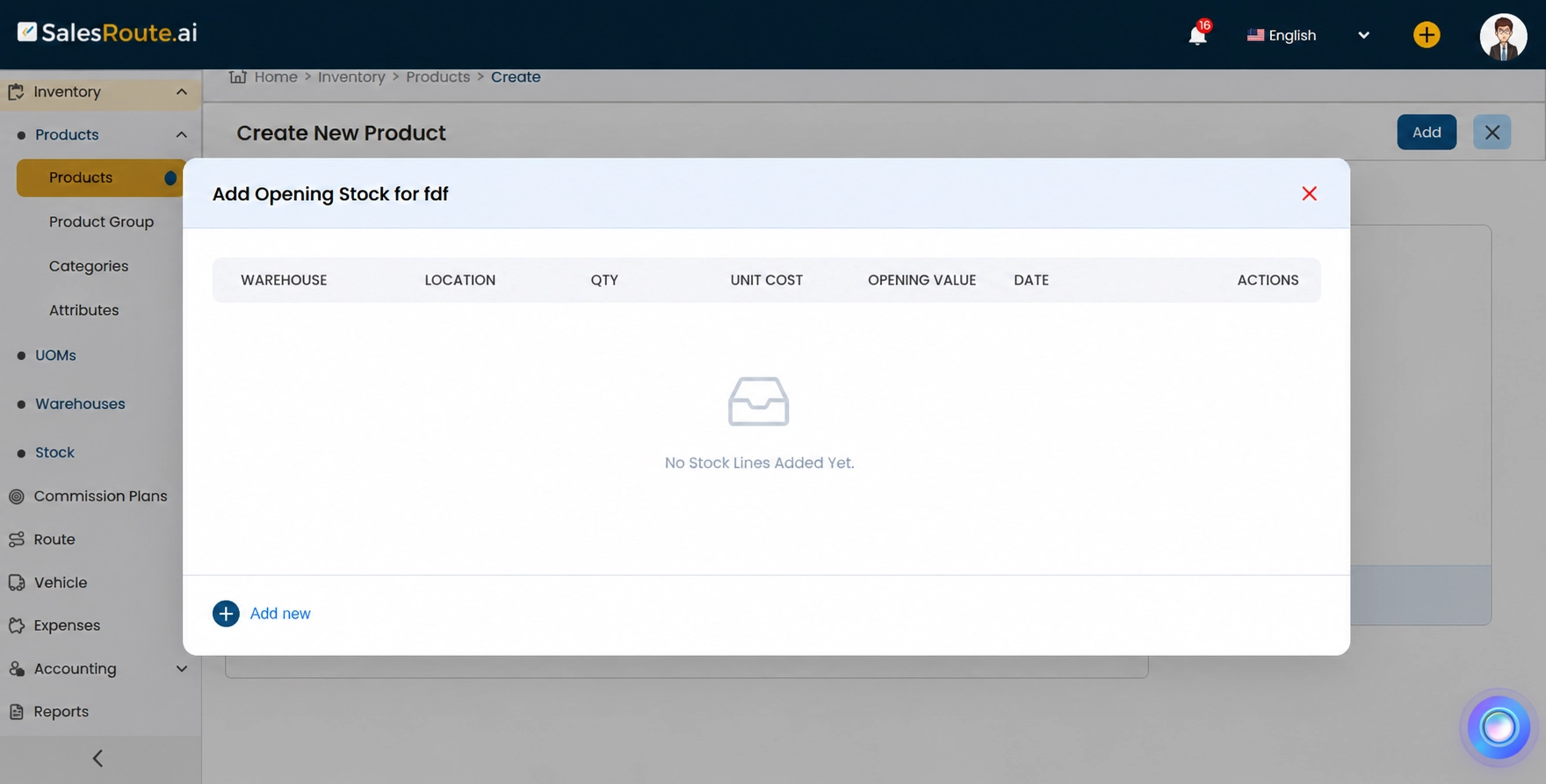
What Is Inventory Management?
Inventory management is the process of tracking products from the time they enter a business until they are sold, delivered, returned, or otherwise adjusted.
It involves more than knowing how many products are available. Businesses also need to understand where products are stored, how much stock has been committed to orders, which items need replenishment, and how inventory changes after each transaction.
An effective inventory management process helps answer five important questions:
- What products do we have in stock?
- Where is the stock available?
- How much stock can we commit to new orders?
- Which products require replenishment?
- How do purchases, sales, returns, and adjustments affect inventory?
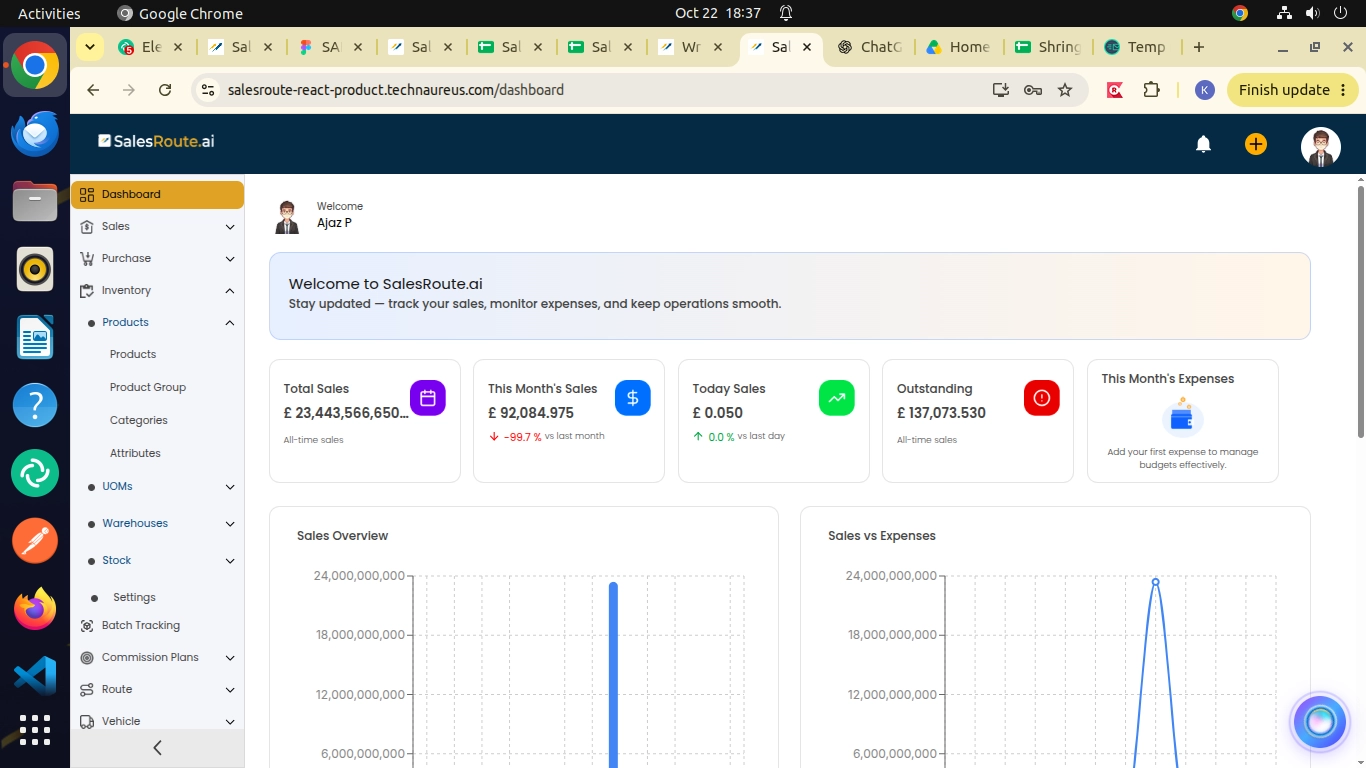
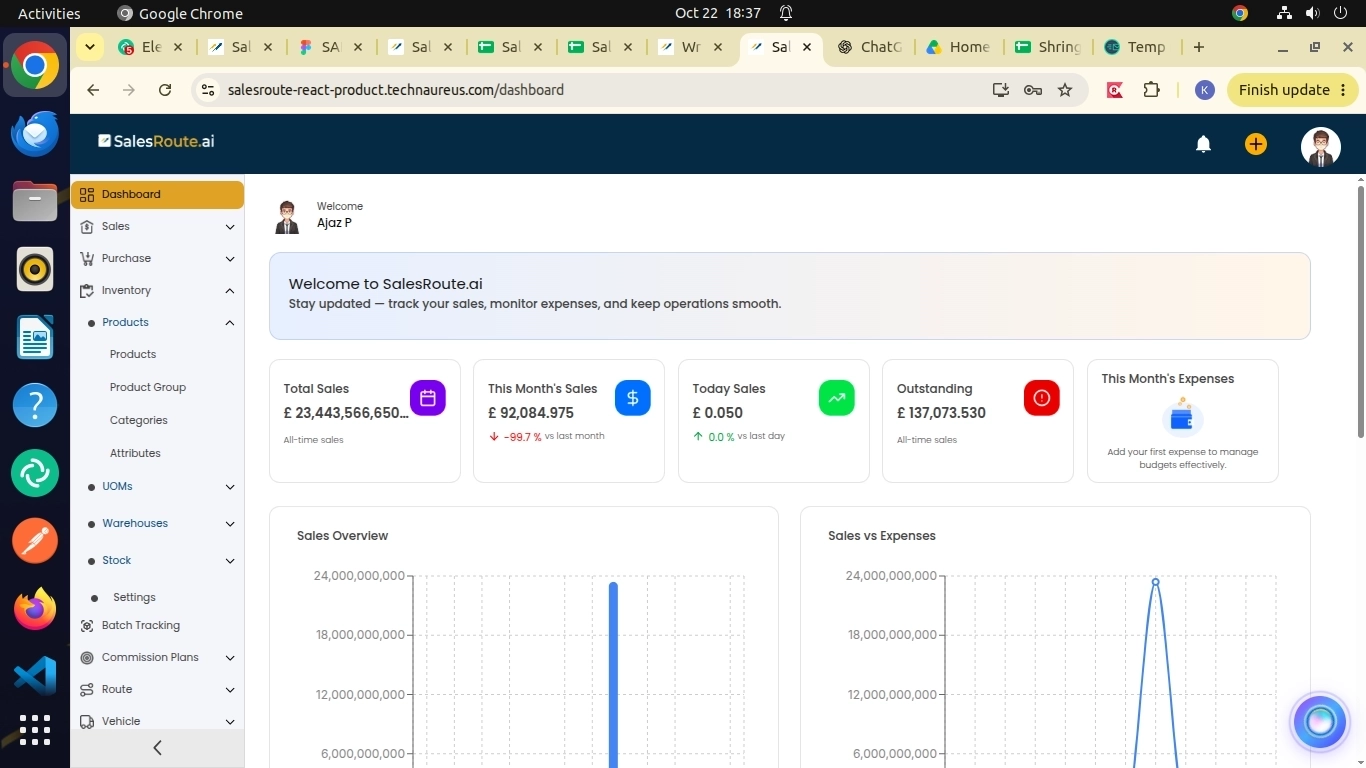
SalesRoute provides inventory management and inventory adjustment capabilities as part of its wider sales and purchasing platform.
Why Is Inventory Management Important?
1. Maintain Better Stock Visibility
Without reliable inventory information, employees may need to check spreadsheets, contact warehouse staff, or physically count products before confirming availability.
A centralized inventory workflow helps teams access stock information more efficiently and reduces dependence on disconnected records.
For example, suppose a distributor has 100 units of a product in its warehouse. If 30 units have already been allocated to customer orders, the team should distinguish between physical stock and stock available for additional orders.
Understanding this difference helps sales teams avoid promising products that are already committed.
2. Reduce Stockouts and Excess Inventory
Both insufficient stock and excess stock create business challenges.
When stock runs out, customer orders may be delayed or lost. When a company purchases more than it needs, money remains tied up in products that may take a long time to sell.
By reviewing stock levels alongside purchasing activity and sales demand, businesses can make more informed replenishment decisions.
The objective is not simply to maintain more inventory. It is to maintain the appropriate inventory for operational requirements.
3. Improve Coordination Between Sales and Warehouse Teams
Sales representatives need accurate availability information before confirming orders. Warehouse employees need clear instructions about what must be picked, packed, and delivered.
When sales and inventory processes are disconnected, an order may be accepted even though the required quantity is unavailable.
Connecting these workflows helps teams coordinate order confirmation and fulfillment more effectively.
4. Maintain More Reliable Inventory Records
Inventory changes whenever goods are received, sold, returned, transferred, or adjusted.
If these movements are not recorded correctly, the quantity shown in the system may differ from the physical quantity in the warehouse.
A structured inventory process makes it easier to trace stock changes, investigate discrepancies, and maintain consistent records.
Key Inventory Management Workflows in SalesRoute
1. Product and Stock Management
Inventory management begins with maintaining accurate product information and tracking quantities associated with those products.
Product identification, units of measurement, warehouse configuration, and relevant stock settings all contribute to reliable inventory records.
For example, a business selling beverages may maintain products in bottles, boxes, and cases. The conversion between these units must be configured correctly to prevent quantity discrepancies.
Accurate product data creates a reliable foundation for purchasing, selling, and reporting.
2. Purchase and Goods Receipt
Purchasing is an important source of incoming inventory.
Consider a distributor that orders 200 units of a product from a supplier. Creating the purchase order records the planned purchase, but it does not automatically mean that all 200 units have physically arrived.
The business must distinguish between ordered stock and received stock.
A typical workflow is:
- Create a purchase order.
- Track the order's status.
- Receive the goods when the supplier delivers them.
- Verify the received quantity.
- Record any shortage, excess, or discrepancy according to the business process.
- Update inventory through the appropriate receipt workflow.
Why does this matter?
If ordered quantities are treated as received stock too early, the system may show products as available when they have not yet arrived. Separating purchasing from receipt helps prevent this misunderstanding.
3. Sales Orders and Delivery Management
Sales transactions influence inventory planning because products may be committed to customers before physical delivery takes place.
For example, a warehouse contains 150 units of a product. A customer places an order for 40 units.
The business needs to distinguish between the physical quantity on hand and the quantity available for other orders. The exact calculation depends on the system's inventory rules, reservations, and pending transactions.
A typical process includes:
- Create the sales order.
- Validate product availability.
- Confirm the order according to the configured business rules.
- Prepare the delivery.
- Record the quantity delivered.
- Review the resulting inventory position.
This connection between sales and inventory helps warehouse teams prepare orders more accurately and enables sales teams to set realistic customer expectations.
4. Warehouse and Location Management
For businesses operating multiple warehouses or storage locations, the total stock quantity alone is not enough.
Imagine a company that holds 80 units in Warehouse A and 20 units in Warehouse B. Although the total is 100 units, a sales representative serving a customer near Warehouse A needs to know whether the required quantity is accessible from the appropriate location.
Warehouse-level visibility helps businesses understand where products are stored and plan fulfillment accordingly.
Where warehouse transfers are supported, businesses should also track stock leaving one location and arriving at another so that quantities remain consistent across locations.
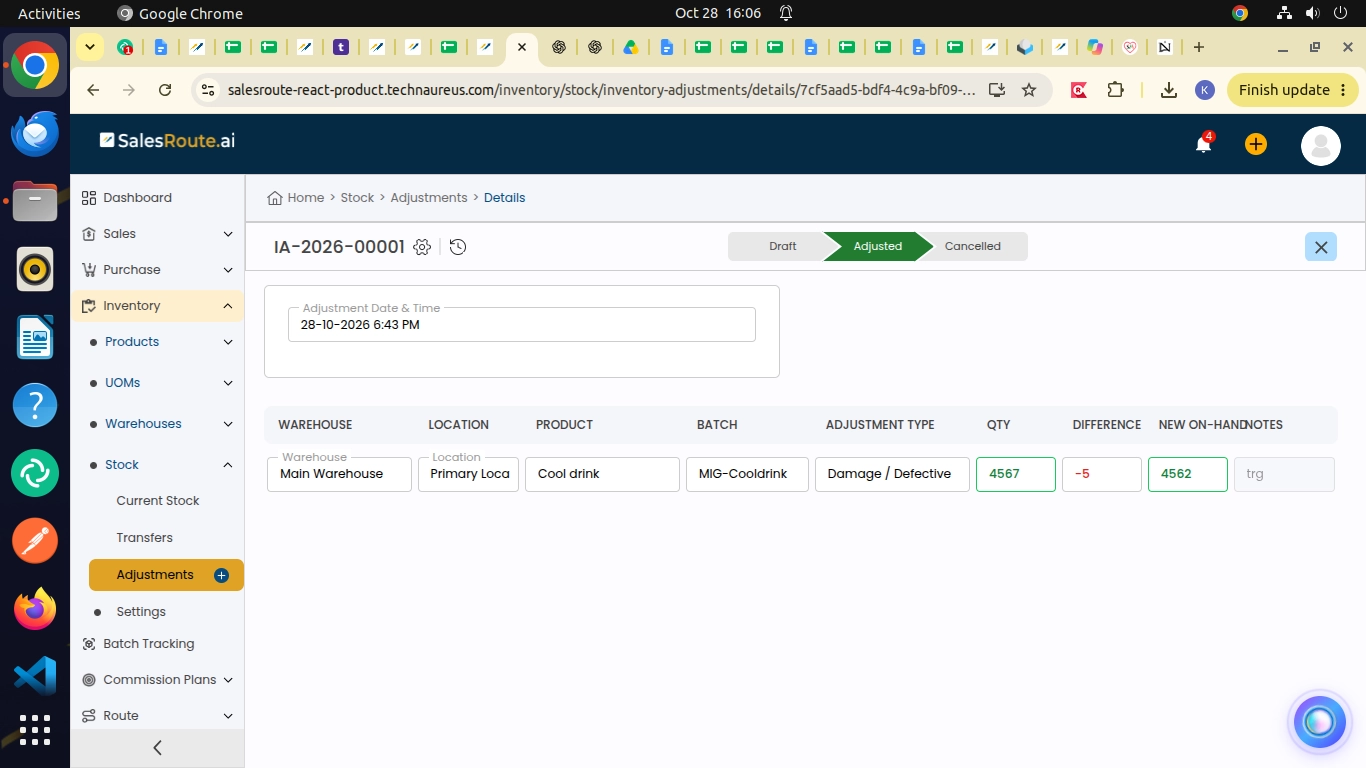
5. Inventory Adjustments
Sometimes the physical stock does not match the quantity recorded in the system.
Common reasons include damaged goods, counting errors, missing items, data-entry mistakes, or other stock discrepancies.
For example:
- System quantity: 75 units
- Physical count: 72 units
- Difference: 3 units
The difference should be investigated and corrected through an authorized inventory adjustment process, with an appropriate reason and supporting record.
Inventory adjustments should not be used as a substitute for proper purchase receipts, sales deliveries, or return transactions. Each transaction should represent the actual business event that occurred.
A controlled adjustment process helps maintain trustworthy inventory data.
6. Sales Returns and Purchase Returns
Returns can affect inventory differently depending on the type of transaction and the status of the returned goods.
Sales return: A customer returns a product previously sold by the business.
Purchase return: The business sends a product back to its supplier.
Consider a customer who returns five units of a product. Those five units should not automatically be treated as available for resale if the return has only been recorded and the goods have not yet been physically received or inspected.
Returned products may require inspection before they can be returned to usable stock. Damaged products may need to be handled separately.
Likewise, a purchase return can affect stock and related transaction records according to the applicable workflow.
Correctly distinguishing between a return request, a recorded return, and a completed physical movement helps prevent inaccurate stock availability.
7. Batch, Expiry, and Product Traceability
Some businesses need to identify products by batch or lot, especially when dealing with expiry-sensitive goods, regulated products, or items requiring traceability.
Where batch tracking is enabled and supported, inventory can be associated with specific batches rather than managed only as a single aggregate quantity.
For example, a distributor may have:
- Batch A: 40 units, expiring in March
- Batch B: 60 units, expiring in June
Although the total quantity is 100 units, the two batches have different expiry dates.
Using an appropriate stock rotation policy, such as First Expiry, First Out (FEFO), can help prioritize the dispatch of products with earlier expiry dates.
For products without expiry concerns, First In, First Out (FIFO) may be suitable when it aligns with the business's operational and valuation requirements.
The applicable tracking and valuation rules should be configured according to the product and business needs.
8. Stock Availability and Forecast Quantity
One of the most important inventory concepts is the difference between stock on hand and forecast quantity.
Stock on hand represents the physical quantity recorded as available in inventory, subject to the system's stock rules.
Forecast quantity estimates the future stock position by considering relevant incoming and outgoing inventory movements.
For example, assume the following:
|
Inventory detail |
Quantity |
|
Current stock on hand |
100 |
|
Expected purchase receipt |
+20 |
|
Pending sales demand |
-35 |
|
Illustrative forecast quantity |
85 |
The calculation is:
Forecast quantity = 100 + 20 - 35 = 85 units.
This example illustrates the general principle; the actual SalesRoute calculation depends on which transaction statuses and inventory movements are included in its forecast logic.
Forecast visibility helps businesses anticipate shortages and plan purchases or fulfillment before problems arise.
A Practical Example: How Inventory Management Supports Daily Operations
Consider a distributor that sells packaged food products to retail stores.
At the beginning of the day, the warehouse records 120 units of a product. A retailer orders 30 units, and the purchasing team has another 50 units on order from a supplier.
The distributor now needs to answer several questions:
- Can the current order be fulfilled?
- How much stock remains after the order is delivered?
- When will the additional 50 units arrive?
- Are there other customer orders competing for the same stock?
- Will another purchase be required to meet expected demand?
If the 30-unit order is fulfilled from the existing stock, the quantity on hand becomes 90 units, assuming no other stock movements occur.
The additional 50 units should be considered according to their actual receipt status and the system's forecast rules. They should not be treated as physically received simply because a purchase order exists.
With connected purchasing, sales, and inventory workflows, the distributor can review these movements more systematically instead of calculating everything manually.
Common Inventory Challenges and How a Structured Process Helps
|
Common challenge |
Recommended inventory practice |
|
Physical stock differs from system stock |
Perform regular counts and investigate discrepancies |
|
Orders are confirmed without sufficient stock |
Validate availability before confirmation |
|
Products are purchased too early or too late |
Review demand, available stock, and expected receipts |
|
Stock is recorded in the wrong warehouse |
Verify warehouse and location details during transactions |
|
Returned products appear available prematurely |
Track physical receipt and inspection status |
|
Expiry-sensitive products are dispatched incorrectly |
Use appropriate batch tracking and stock rotation rules |
|
Reports show confusing quantities |
Clearly distinguish on-hand, committed, incoming, and forecast quantities |
These practices help businesses improve inventory accuracy while reducing avoidable operational confusion.
Best Practices for Getting More Value from SalesRoute Inventory Management
To maintain reliable inventory records, businesses should establish a few consistent practices.
Maintain accurate master data. Ensure that product names, units of measurement, warehouses, and relevant product settings are correct.
Record transactions at the right time. Purchase orders, receipts, sales orders, deliveries, and returns represent different business events and should be recorded accordingly.
Monitor stock regularly. Review stock levels and investigate unusual differences between system records and physical counts.
Control inventory adjustments. Restrict adjustments to authorized users and document the reason for each change.
Review product movement and demand. Use available inventory and sales reports to identify